Archive for the 'Literature' Category

Confidential

How much can you put yourself into the mind of another individual? It’s not a trick question: though I ask it a lot, I seem to do it a lot too.

My work on Marvell and Private Lives took up most of 2011, and it’s been a wonderful introspective process because the way I’ve symbiotically linked our biographies together has given me license to think as deeply and darkly as I please.

But now, just as I come to wrap this up, there’s something quite subtle which doesn’t add up.

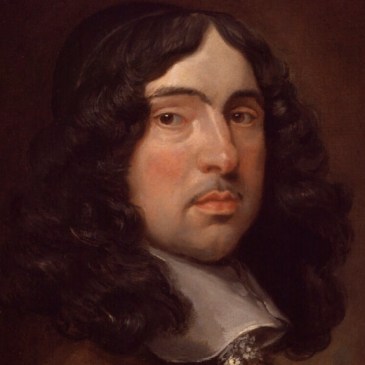
Marvell almost always strikes the reader as the shy, demure sort. Occasionally women are abruptly visible, but otherwise they are teasingly distant, obscured, or absent. He weaves threads of complicated desire behind fastastical themes and layers of honeycombed language.

Honeycomb_FracFx

But perhaps that’s just his writing. After all, his publishing history is thin, and there’s little sign that Marvell placed a great deal of value on the majority of his own poems. Perhaps he’s even embarrassed by them. Why would that be?

Continue reading ‘Confidential’

Shadow Seasons: An Epilogue, 2011

Dedicated to the few who messaged on New Year’s Eve.

2011 was a story I don’t know how to tell. It’s a year that had so many structural positives, countered by surface negatives. Perhaps it’s best defined by what others have said.

Shadows

In the early summer, I was ‘strange’, ‘sick’ and ‘damaged goods’. Thanks. In the mid-summer, I was an expletive abomination. Consequently, in the late summer, I was branded a defeatist.

Victimisation does arise sometimes. Not because it is wanted – if there’s a brand of people who don’t want to be happy, this author is not one of them – but because it’s a way of dealing with the various angles of attack and the after-effects that cannot be disguised.

Continue reading ‘Shadow Seasons: An Epilogue, 2011′

Agency: Too Much Left Unsaid

What is said, matters. How it is said, matters. To whom it is said, matters. When it is said, matters.

The little nuances of our communication are more intricate and powerful than we often care to believe. How much value do we place on the words ‘Love’ and ‘Hate’? When does ‘never’ mean never? Why does one person’s way of speaking catch our imagination in a different way to another?

After the Fact

I’ve had the privilege of hearing the inspiring Tom Lockwood twice before: at the British Milton Seminar in 2008, and at his Chatterton Lecture on John Donne in 2009 (I’m heard 67 minutes in). His recent presentation at Leicester’s Early Modern Seminar on ‘agency’ presented a particular conundrum which is encountered – as often happens – in study and life combined.

What agency do words have after the fact? If something is said too late, does it matter that it was said at all? What if something is not said, or revealed too late?

Continue reading ‘Agency: Too Much Left Unsaid’

The Invisible Self

As a child, I remember keeping two football posters for any length of time. One was Chris Waddle at Sheffield Wednesday, the other was Gary Speed at Leeds.

Sad times. I lament saying that when encountering the headline ‘Gary Speed found dead’, I knew what the cause would be.

Removing the football side of this story, there was a universally liked and respected individual (which is a real challenge in football), with talent, good looks, a wonderful family. Everyone spoke highly of him, admired his energy, and said how happy he always seemed.

A life, alas, defined by its too-perfect happiness. It’s not a new phenomenon to believe that the happiest people are often the most unstable, and there’s sociological suggestions that the happiest states have the highest suicide rates.

Perfect happiness is a symptom. It’s the perfect mask to the secret invisible self. Continue reading ‘The Invisible Self’

All-Important Questions

Every so often, we hit those defining moments where we ask ourselves the all-important questions. What has made us who we are? Why do we do what we do? Why do we live the way we live? What do we value most in life?

And it’s hard, because to approach such questions risks revealing many difficult answers, or things that we never want to contemplate. I’ve been drawn to revisit a favourite post of mine again, which describes how things that we pretend are complicated are often remarkably simple. And so, with that in mind, I ask myself why I do what I do, and if it reflects the person I am and want to be.

Continue reading ‘All-Important Questions’

New Horizons

Inspired by, and dedicated to, those who didn’t write me off. (And welcome to any students who are looking for information on Marvell and arriving here. Please do contact me if you want any help).

This could be a maelstrom: of sentiments; of changes; of minds and mysteries. Much has changed in recent weeks, with positive challenges and valued rewards. It has been difficult to document it all, and the positivity comes with understandable nervousness and a touch of trepidation.

“The only way is onwards…”

Ideally, we want our lives to lead upwards trajectories. When somebody hits particular heights for themselves, they struggle to contemplate living within or below that potential. That’s the intricate psychology of accomplishment.

My life took such a monumental leap four years ago that when the subsequent falls struck with intent, no amount of trying, support, or soul-searching could arrest the slide, nor console its gravity. And this beautiful little portal came to life, with its artistry, its cadence, and its candour, as sadness drove and inspired my best writing.

I’ve told stories through feelings, and feelings through stories. I’ve read poetry through loneliness, and loneliness through poetry. I’ve discovered Marvell through myself, and myself through Marvell.

Continue reading ‘New Horizons’

Marvell, Glass, and ‘Upon Appleton House’

It is difficult to escape reflection. Mirrors are common enough (and, one might argue, hurtful enough), but windows are often reflectors as well as transparent portals. Personal experience also determines that reflection is there to antagonise the mind as well as to merely display the body. That is the paradigm of glass, a most ambivalent servant.

Ekphrasis becomes a common feature of Marvell’s Interregnum writing, but before it served his Cromwellian verse, these perspective features – of viewing and reflection, of the viewer and beyond – combine in a remarkable way in Marvell’s Upon Appleton House. Marvell’s portrayal of the private Lord Fairfax relies heavily on the construction and reflection of the self through private property and its (often vitrified) representations. Continue reading ‘Marvell, Glass, and ‘Upon Appleton House’’

Behind Closed Doors

When I consider the poetry that inspires me the most, it all seems to have privacy at its root. Perhaps, given an earlier definition of poetry as ‘95% loneliness’, this is not surprising. Yet, not only does poetry have a long tradition of being a public form, but privacy as a theme remains a dark and complex subject that manifests itself in fascinating ways.

Our recent instalment on KUSP Radio, Santa Cruz, a 1-on-1 discussion with Gwynne Harries, was generously dedicated to my favourite poems. The (perhaps surprising) choices to best fit into the parameters of the show were ‘Sestina [September Rain]’ by Elizabeth Bishop, and ‘Porphyria’s Lover’ by Robert Browning, two poems that I’ve known and loved for many years, and which both deal with loss and loneliness from vastly different perspectives. As an addendum to what was discussed on the show, to compare these together offers something striking and special.

The Poetry Show, KUSP / Radio Santa Cruz, California

Continue reading ‘Behind Closed Doors’

Media Revolutions and “Friends”

Social Media and Friends

When I needed a neighbour
Were you there, were you there?
When I needed a neighbour
Were you there?
And the creed and the colour
And the name won’t matter
Were you there?

One of the most eye-catching and notorious details about Andrew Marvell was his lack of friends. On the one hand, who could blame all those who knew him? He was (or became) a private, suspicious man, angry and fractious at times. He may have had difficult experiences with women and almost certainly did with alcohol.

On the other hand, who could blame him? He was dedicated to his work. He witnessed others readily changing allegiances and forsaking conscience. He witnessed fiendish intelligence networks sabotaging the postal system. And, supposedly, he had to dismiss a corrupt attempt at bribery.

Marvell’s strong aptitude for privacy amidst an expansive public sphere would naturally make his friendships more cautious and selective. Or, was it simply that he cared about what friendship actually meant? The relationship between Marvell and Milton was hardly straightforward, but it persevered, and ‘On Mr Milton’s Paradise Lost’ is a powerful gesture.

Continue reading ‘Media Revolutions and “Friends”’

Review: Cosi @ The King’s Head Theatre, Islington

On 12th July, I accompanied a fellow enthusiast to see Knightmare’s Edmund Dehn in the Australian play Cosi at the King’s Head Theatre, Islington. Below is a review of a gripping, humorous, and thought-provoking production.

Louis Nowra’s Cosi is a witty and arresting semi-autobiographical play set inside an Australian asylum in the early 1970s. Theatre graduate Lewis is commissioned to direct a performance with a group of sectioned volunteers. The eccentric Roy (Edmund Dehn), the only member with discernible theatrical interest, champions Mozart’s Cosi fan Tutte with such fervour that it eventually gets adapted to the purpose and its limited cast, none of whom can either sing or speak Italian. The dissection of the musical becomes an absorbing exploration of faithfulness and fidelity, revealing more integral human values in the mentally estranged than in the apparent ‘normality’ of the outside world.

Continue reading ‘Review: Cosi @ The King’s Head Theatre, Islington’

Next Page »


Archives

Enter your email address to subscribe to this blog and receive notifications of new posts by email.

Join 181 other followers


Follow

Get every new post delivered to your Inbox.

Join 181 other followers