Archive for the 'Geneva' Category


Writing for Art

Orpheus and Eurydice

Lord Leighton, Orpheus and Eurydice (c. 1864)

But give them me, the mouth, the eyes, the brow!
Let them once more absorb me! One look now
Will lap me round forever, not to pass
Out of its light, though darkness lie beyond:
Hold me but safe again within the bond
Of one immortal look! All woe that was,
Forgotten, and all terror that may be,
Defied, no past is mine, no future: look at me!

Robert Browning

Writing for art, or ekphrasis, as it may be termed, has held a special place within my thought since an undergraduate tutorial led by the amazing Dr. Stephen Cheeke, whose first book on the subject, Writing for Art: The Aesthetics of Ekphrasis, was published in 2008 by Manchester University Press.

Can I follow in the footsteps of such a role model? It is not beyond the realms of possibility to apply for a post-doctoral project thinking about Marvell in this light. In the first instance, though, there is the smallest of chances that writing and art might permeate my professional life sooner rather than later in a different capacity, and how desperately do I both want and need this chance. [It is not a question, but a statement].

But give it me: the talk, the choice, the nod.
Let your decision absorb me! Let those Gods
Who sent me to Geneva not let me pass
Out of their sight, though darkness fell within:
Make me but safe again within my skin
With one immortal chance! All woe be glass,
In shatters, and all terror that may befall,
Recoil. The past resigns, the future: ‘waits your call.

KaM

Wasted Talent

If I am following the destiny of Andrew Marvell so well, chances are that, thanks to biographical hints from John Aubrey, I will have to develop a taste for the grapevine.

He kept bottles of wine at his lodgeing, and many times he would drink liberally by himselfe to refresh his spirits and exalt his muse.

Though [Marvell] loved wine he would never drink hard in company, and was won’t to say that he would not play the goodfellow in any man’s company in whose hands he would not trust his life.

But this development probably took place near the end of Marvell’s life when he had more powerful enemies in London than trusty friends. We are not surprised then to see one of those enemies call him, after his death, a drunken buffoon, ‘temulentus scurra’.

Pierre Leguois, Andrew Marvell: Poet, Puritan, Patriot (1968), 98.

It is not surprising that a man obsessed with privacy who was eventually elected as an MP at least had an understanding of public impressions. In the context of the slanderous and wide-reaching seventeenth-century print culture, this limited trail of evidence suggests that Marvell’s vice was, by and large, a private one. In the context of what is to come, I share a modicum of my own private life: Friday night.

Continue reading ‘Wasted Talent’

“A Mirror Up To Nature”: Hamlet (2009)

"A Mirror Up To Nature": David Tennant in the RSC's Hamlet (2009)

"A Mirror Up To Nature": David Tennant in the RSC's Hamlet (2009)

Although not wanting to abscond from Roxette’s ‘air of silence’ previously, I am inspired to move from Sweden to Denmark, and from Lear to another fine play, Hamlet. Despite largely avoiding Shakespeare at undergraduate level, I taught this play, new to me then, to first-year undergraduates in a very nervous first term in Geneva. This production, that I watched on the strength of the main actor above any other specific merits, alerted me not only to the skills I have picked up since, but also a new sense of seeing theatre. Between theatre and film, between traditional and contemporary, between stolid culture and celebrity impasse, this version struck an excellent compromise for 2009. I felt like I was watching something unique – that kept me attached.

This Hamlet of 2009 is to tragedy what Shakespeare in Love of 1998 was to comedy (despite the latter, ironically, portraying a tragedy itself). A play is a play, a king is a thing; a stage (all the world) is a stage, and has its stage limitations. For all the intricacies not necessarily visible to the average human eye, stage productions can just be too alike. For classics of Shakespeare’s corpus, played endlessly at the finest theatres by the finest players, it has been time to bring the imagination alive again.

Continue reading ‘“A Mirror Up To Nature”: Hamlet (2009)’

Farewell Frost, (or Waking the Dead)

It is good to see the warmer weather returning, and to feel the sunshine gracing us again. It makes quite a considerable difference to monotonous days. The weather this past week first brought to mind the setting of Robert Browning’s ‘A Lover’s Quarrel’: “Oh, what a Dawn of Day! / How the March sun feels like May”. However, at the back of my mind, a slightly more convoluted idea was forming, taking its roots in Robert Herrick’s ‘Farewell Frost, or Welcome Spring’.

FLED are the frosts, and now the fields appear
Re-cloth’d in fresh and verdant diaper.
Thaw’d are the snows, and now the lusty spring
Gives to each mead a neat enamelling.
The palms put forth their gems, and every tree
Now swaggers in her leafy gallantry.
The while the Daulian minstrel sweetly sings,
With warbling notes, her Terean sufferings.
What gentle winds perspire !   As if here
Never had been the northern plunderer
To strip the trees and fields, to their distress,
Leaving them to a pitied nakedness.
And look how when a frantic storm doth tear
A stubborn oak, or holm, long growing there,
But lull’d to calmness, then succeeds a breeze
That scarcely stirs the nodding leaves of trees :
So when this war, which tempest-like doth spoil
Our salt, our corn, our honey, wine and oil,
Falls to a temper, and doth mildly cast
His inconsiderate frenzy off, at last,
The gentle dove may, when these turmoils cease,
Bring in her bill, once more, the branch of peace.

Robert Herrick, ‘Farewell Frost, or Welcome Spring’

The identity of the seventeenth-century citizen, and much of their livelihoods in turn, revolved around ideology: moral instruction and religious practice. Today, far-removed, we revolve around different factors. Whether financial, material, status, pride, or perhaps family, children, and day-to-day survival, much of this boils down to occupation. What is evidently comparable, though, is the scale of the effect on livelihood.

Continue reading ‘Farewell Frost, (or Waking the Dead)’

Way Out

[Amended from Original]

It is nights like this where I am glad for another space to turn to. The academic climbs of the past few months, even the past two weeks, have been outstanding. I have spoken with people, who, before this period, I would only have dreamt of meeting; Professors contacting me through various channels discovered on the internet and offering all sorts of help – unimaginable.

Yet this seems permanently overshadowed by neverending problems in Switzerland, not least as time here nears its end. As much as the people in the English Department are wonderful, this place is a recurrent and desperate nightmare. There are four separate forms to be filled in to leave the country, all of which need delivering to different places. A charge is levied for a leaving certificate: freedom from prison.

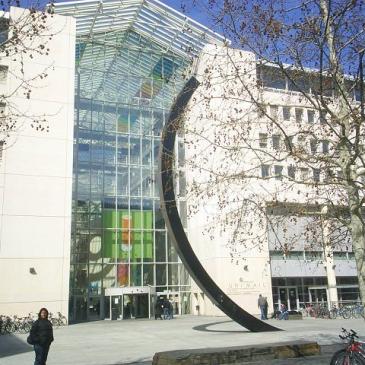
I had to go to the admin building, Uni Dufour, last week to try and sort out the extremely messy business of matriculation, 12 months after I was reprimanded about my French there. There had been a misunderstanding, and the stern headmistress was even less impressed this morning. Why had I not appeared at her summons last year? Because my registration file should have been complete. But no, she is not satisfied that she has seen original documents, even though I went through the painstaking process of getting them here, taking them last year, and she herself offering to copy them. At that, everything stalled, indefinitely. As a member of staff at the university, I should not have let myself be intimidated to the bone like that, but could do no more than utter ‘Je les ai apporté’ without assertiveness. I was left to shiver through coat and scarf through the various shakings of the head from the other side of the desk. The positive upshot of this – and there is one – is that I should be guaranteed student status at Geneva in absentia with Lukas’ supervision.

Uni Dufour / Prison / Mental Asylum

Uni Dufour / Prison / Mental Asylum

Continue reading ‘Way Out’

Time Out

[Amended from Original]

There is finally some space to breathe this week. After several weeks of lengthy texts in The Grand Remonstrance, Areopagitica, The Kings Cabinet Opened, we move to two weeks’ respite with poetry. This may prove rather a false dawn. The tasks and reading for the Early Modern Material Text MA Seminar I am shadowing are quite demanding. Prof. Anthony Mortimer will be speaking at our fortnightly Doctoral Workshop next week, with heavy preparatory reading. Earlier this year, Prof. Mortimer asked me about the paper I gave at the Origins Conference in April. Marvell’s elegy was placed within a collection of three (with Sprat and Dryden), and then replaced at a late stage by Edmund Waller’s before publication. The title of my paper, ‘One of the Three’, had been grossly misleading for that reason. As the workshop applies most directly to me, it is important that I make the most of it.

It is always fascinating to see the rise and fall of different components of this kind of occupation. Continue reading ‘Time Out’

Samemes

At the beginning of the summer, I was tasked with creating a poster for the Swiss Association of Medieval and Early Modern English Studies (SAMEMES). It was this newly formed association whose inaugural opening Origins conference/seminar I presented at a few months ago. Having prepared this for the upcoming first main conference, Pretexts, Intertextualities, and the Construction of Textual Identity, a generic version needed to be done again. When patience eventually rediscovered itself, the final version was eventually made.

The aforementioned conference will feature several presentations from Geneva: Petya Ivanova, Ioana Balgradean, Louise Wilson and Sarah Van der Laan; and plenary lectures from Prof. Stephen Orgel and Bristol’s Prof. Ad Putter. Despite the obvious pleasures, I am once again the solitary student male from Geneva, staying in a different building with different arrangements from everyone else. I am not attending the conference dinner, and I’m glad it is only a one-night stay. Finally, on the artistic front, it has been time for a refresh. The course website has been updated, with a new (though simple) homepage. ‘Improvement’, it would seem, is a simple enough, and apt enough, target.

« Previous Page


Archives

Enter your email address to subscribe to this blog and receive notifications of new posts by email.

Join 186 other followers


Follow

Get every new post delivered to your Inbox.

Join 186 other followers