Posts Tagged 'Early Modern'


Body Schema

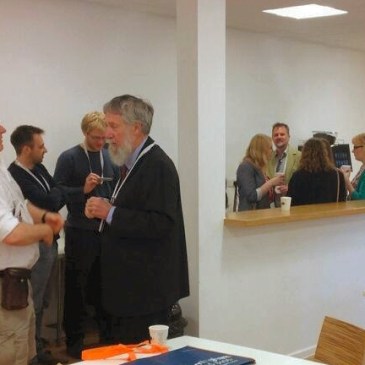
After a day like today, recent goblin reminiscence and all, the search for “taking nothing seriously” (relating to this post) rounds itself here. I’m still a boy at heart who finds the childish banal so very funny. Perhaps that is why seventeenth-century literature appeals so much.

The Boys

The Girls

The Boys Again

Richings (left). His fault.

The legend, Matt Richings (left). His fault, as great laughter evolves in pairs.

There are many precedents to this kind of humour in English Civil War material. They come in fascinating shapes, forms, and stories. Continue reading ‘Body Schema’

The Stigma of Print

Illuminations. How far do they attract?

Illuminations. How far do they attract?

J. W. Saunders’ study ‘The Stigma of Print’ (1951) touched an important nerve on the subject of publication. The premise is that with the advent of print in the Tudor period, the commercialisation of writing was regarded by many as a vulgar and defamatory practice. Literature was imbued with a mode of exclusivity. Whilst the circulation of manuscripts around small coterie circles was a cultured activity, choosing to disseminate to a wider audience for fame and prestige devalued the whole basis of writing. Despite claims that it became ‘unfashionable’ by the mid-seventeenth century, few demonstrate this ‘stigma’  more than Andrew Marvell in the early-modern period. In this digital age, it continues to live on.
Continue reading ‘The Stigma of Print’

Farewell Frost, (or Waking the Dead)

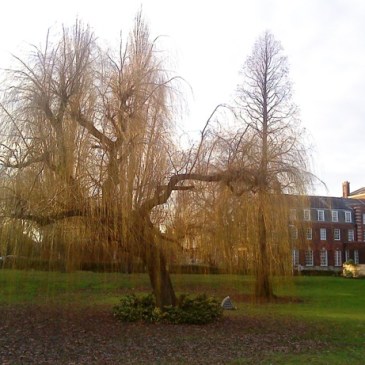
It is good to see the warmer weather returning, and to feel the sunshine gracing us again. It makes quite a considerable difference to monotonous days. The weather this past week first brought to mind the setting of Robert Browning’s ‘A Lover’s Quarrel’: “Oh, what a Dawn of Day! / How the March sun feels like May”. However, at the back of my mind, a slightly more convoluted idea was forming, taking its roots in Robert Herrick’s ‘Farewell Frost, or Welcome Spring’.

FLED are the frosts, and now the fields appear
Re-cloth’d in fresh and verdant diaper.
Thaw’d are the snows, and now the lusty spring
Gives to each mead a neat enamelling.
The palms put forth their gems, and every tree
Now swaggers in her leafy gallantry.
The while the Daulian minstrel sweetly sings,
With warbling notes, her Terean sufferings.
What gentle winds perspire !   As if here
Never had been the northern plunderer
To strip the trees and fields, to their distress,
Leaving them to a pitied nakedness.
And look how when a frantic storm doth tear
A stubborn oak, or holm, long growing there,
But lull’d to calmness, then succeeds a breeze
That scarcely stirs the nodding leaves of trees :
So when this war, which tempest-like doth spoil
Our salt, our corn, our honey, wine and oil,
Falls to a temper, and doth mildly cast
His inconsiderate frenzy off, at last,
The gentle dove may, when these turmoils cease,
Bring in her bill, once more, the branch of peace.

Robert Herrick, ‘Farewell Frost, or Welcome Spring’

The identity of the seventeenth-century citizen, and much of their livelihoods in turn, revolved around ideology: moral instruction and religious practice. Today, far-removed, we revolve around different factors. Whether financial, material, status, pride, or perhaps family, children, and day-to-day survival, much of this boils down to occupation. What is evidently comparable, though, is the scale of the effect on livelihood.

Continue reading ‘Farewell Frost, (or Waking the Dead)’

« Previous Page


Archives

Enter your email address to subscribe to this blog and receive notifications of new posts by email.

Join 186 other followers


Follow

Get every new post delivered to your Inbox.

Join 186 other followers